I Watched These. Then I Looked at My Life.
- QUÉ
- I didn't set out to find these three together. One came from a late-night rabbit hole. Another came from a friend who said, “Just watch it.” The third I almost skipped because the thumbnail looked boring. They draw from different films, eras, and perspectives. But something connects them — something I couldn't name until I'd watched all three in one sitting. It has to do with time. And attention. And the feeling that life is happening slightly faster than you're actually living it. Watch them in order if you can. Just over 32 minutes in total.
- NOTA DEL VÍDEO 1
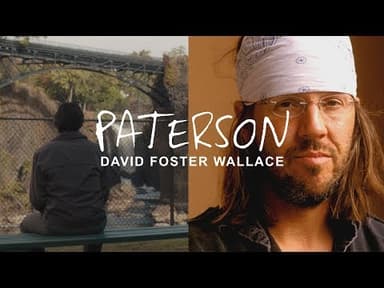
- What Paterson Taught Me About Paying AttentionPaterson is a bus driver whose days follow a quiet routine: he drives the same route, listens to the people around him, writes poems, and returns home. Through Jim Jarmusch’s film and David Foster Wallace’s ideas about attention, this essay asks whether a meaningful life requires extraordinary achievements—or whether meaning can also be found in how carefully we notice ordinary things. What stayed with me was the idea that attention itself can be a form of care. It feels like the right place to begin a Box about time, meaning, and how we are living. Good for: anyone who feels as though nothing important is happening in their life right now. Video information Original title: Everyday Virtue | Paterson & David Foster Wallace Channel: Like Stories of Old Published: May 26, 2017 Runtime: 8 min 12 sec
- NOTA DEL VÍDEO 2
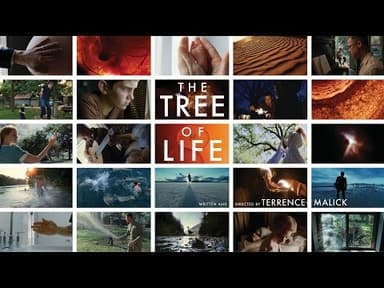
- How The Tree of Life Turns One Family’s Story into a UniverseThe first video finds meaning in everyday routines. This one suddenly widens the frame. Terrence Malick’s The Tree of Life begins with memories of a family in 1950s Texas, then reaches all the way back to the birth of the universe. Like Stories of Old explores how fragmented memories, images of nature, sound, and editing bring an intimate family story and cosmic time into the same emotional space. Rather than reducing the film to one clear explanation, the essay helps us understand how its unusual form creates meaning. I had watched The Tree of Life twice before and found it beautiful but distant. After this essay, it felt less like a puzzle to solve and more like an experience to enter. Good for: a quiet evening when you are in the mood to think. ※ This essay discusses major scenes and themes from the film. Video information Original title: The Tree of Life | Crafting an Existential Masterpiece Channel: Like Stories of Old Published: May 7, 2017 Runtime: 19 min 25 sec
- NOTA DEL VÍDEO 3
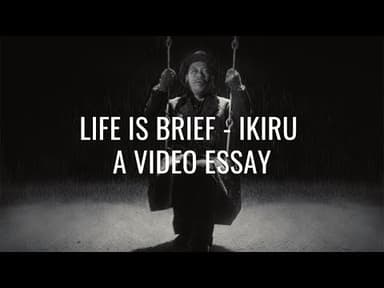
- Ikiru Asks What Makes a Life Worth LivingThe first two videos ask us to look more closely at everyday life. The final one confronts us with how little time we may have to do so. Akira Kurosawa’s 1952 film Ikiru follows Kanji Watanabe, a longtime bureaucrat who learns that he is terminally ill and realizes how little of his life has truly felt alive. This video essay examines how the film moves from fear and emptiness toward purposeful action. Through Watanabe’s story, it explores mortality, bureaucracy, legacy, and the quiet dignity of doing one meaningful thing for someone else. What stayed with me was not simply the reminder that life is short. It was the thought that being alive may begin when we stop postponing what matters. Good for: a moment when life feels repetitive or your priorities need resetting. ※ This essay discusses the film’s major scenes and ending. Video information Original title: Life Is Brief | Ikiru (1952) Video Essay Channel: Kuya Sunset Published: May 1, 2019 Runtime: 4 min 43 sec
Vídeos (3)
 Spottr8020/05/20260 seguidores
- QUÉ
- I didn't set out to find these three together. One came from a late-night rabbit hole. Another came from a friend who said, “Just watch it.” The third I almost skipped because the thumbnail looked boring. They draw from different films, eras, and perspectives. But something connects them — something I couldn't name until I'd watched all three in one sitting. It has to do with time. And attention. And the feeling that life is happening slightly faster than you're actually living it. Watch them in order if you can. Just over 32 minutes in total.
- NOTA DEL VÍDEO 1
- What Paterson Taught Me About Paying AttentionPaterson is a bus driver whose days follow a quiet routine: he drives the same route, listens to the people around him, writes poems, and returns home. Through Jim Jarmusch’s film and David Foster Wallace’s ideas about attention, this essay asks whether a meaningful life requires extraordinary achievements—or whether meaning can also be found in how carefully we notice ordinary things. What stayed with me was the idea that attention itself can be a form of care. It feels like the right place to begin a Box about time, meaning, and how we are living. Good for: anyone who feels as though nothing important is happening in their life right now. Video information Original title: Everyday Virtue | Paterson & David Foster Wallace Channel: Like Stories of Old Published: May 26, 2017 Runtime: 8 min 12 sec
- NOTA DEL VÍDEO 2
- How The Tree of Life Turns One Family’s Story into a UniverseThe first video finds meaning in everyday routines. This one suddenly widens the frame. Terrence Malick’s The Tree of Life begins with memories of a family in 1950s Texas, then reaches all the way back to the birth of the universe. Like Stories of Old explores how fragmented memories, images of nature, sound, and editing bring an intimate family story and cosmic time into the same emotional space. Rather than reducing the film to one clear explanation, the essay helps us understand how its unusual form creates meaning. I had watched The Tree of Life twice before and found it beautiful but distant. After this essay, it felt less like a puzzle to solve and more like an experience to enter. Good for: a quiet evening when you are in the mood to think. ※ This essay discusses major scenes and themes from the film. Video information Original title: The Tree of Life | Crafting an Existential Masterpiece Channel: Like Stories of Old Published: May 7, 2017 Runtime: 19 min 25 sec
- NOTA DEL VÍDEO 3
- Ikiru Asks What Makes a Life Worth LivingThe first two videos ask us to look more closely at everyday life. The final one confronts us with how little time we may have to do so. Akira Kurosawa’s 1952 film Ikiru follows Kanji Watanabe, a longtime bureaucrat who learns that he is terminally ill and realizes how little of his life has truly felt alive. This video essay examines how the film moves from fear and emptiness toward purposeful action. Through Watanabe’s story, it explores mortality, bureaucracy, legacy, and the quiet dignity of doing one meaningful thing for someone else. What stayed with me was not simply the reminder that life is short. It was the thought that being alive may begin when we stop postponing what matters. Good for: a moment when life feels repetitive or your priorities need resetting. ※ This essay discusses the film’s major scenes and ending. Video information Original title: Life Is Brief | Ikiru (1952) Video Essay Channel: Kuya Sunset Published: May 1, 2019 Runtime: 4 min 43 sec
Comentarios0
Aún no hay comentarios.