Are Algorithms Changing Us? Attention, AI, and What Makes Us Human
- WHAT
- Algorithms do more than decide what appears in our feeds. They influence what holds our attention, how we work, how we use AI, and sometimes even how we understand ourselves. This PickBox brings together five videos that move from a familiar problem—why it has become so difficult to focus—to broader questions about algorithm design, automation, critical thinking, and what makes us human. Some of the videos are recent, while others were made before generative AI became part of everyday life. The older ones are included not as current predictions, but as questions worth revisiting now. If you can, watch them in order. The full journey takes about an hour.
- WHY
- I use recommendation feeds and AI tools every day, often without noticing how they may be changing my attention, habits, or way of thinking. Rather than deciding whether technology is simply good or bad, I wanted to ask a quieter and more personal question: As machines become capable of doing more for us, what should we continue doing for ourselves? Placed together, these videos made the subject feel less like a story about technology and more like a story about being human.
- WHO
- For anyone who uses social media or AI and has wondered what these tools might be changing—not only around us, but within us. No technical background is needed. This Box may be especially interesting if you care about attention, digital well-being, the future of work, critical thinking, or the relationship between technology and human life.
- VIDEO NOTE 1
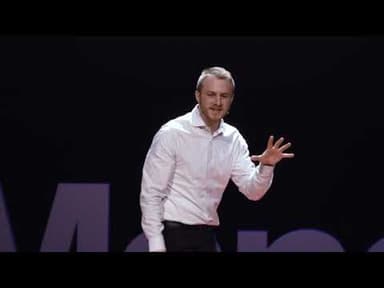
- Attention First | Why It Has Become So Hard to FocusBefore asking how algorithms and AI may be changing us, this Box begins with something more immediate: the difficulty of holding our attention. Author and productivity expert Chris Bailey argues that the problem is not distraction alone, but overstimulation. Drawing on his own experiments with reducing digital stimulation, he explores how constantly seeking novelty can leave less room for focus, reflection, and unexpected ideas. This is less a lesson about getting more done than an invitation to notice what our minds have gradually become accustomed to. My takeaway: perhaps I am not simply bad at focusing. Perhaps my mind rarely gets the quiet it needs. Video information Original title: How to Get Your Brain to Focus | Chris Bailey | TEDxManchester Channel: TEDx Talks Published: April 8, 2019 Runtime: 15 min 57 sec
- VIDEO NOTE 2
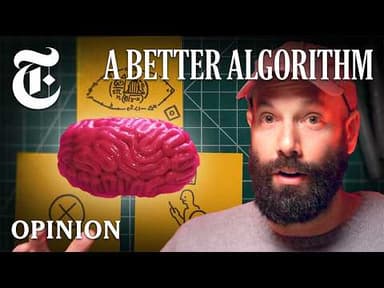
- The Feed Is a Choice | What Should an Algorithm Serve?After the first video examines what constant stimulation does to our attention, this one turns toward the systems creating much of that stimulation. Musician and Patreon co-founder Jack Conte argues that algorithms are not neutral. They reflect the priorities and business models of the people who design them. When a platform optimizes for watch time and immediate engagement, creators are pushed to chase trends while viewers are encouraged to keep scrolling. Rather than rejecting algorithms altogether, Conte proposes different priorities: long-term relationships between creators and fans, art supported by people instead of advertising, and greater control for the humans using the system. Because Conte is also the CEO of Patreon, this is not a detached academic critique. It is partly Patreon’s own product philosophy—which makes it worth watching with both curiosity and a little distance. My takeaway: an algorithm is not simply something that happens to us. Someone has decided what it should reward. Video information Original title: I’m Building an Algorithm That Doesn’t Rot Your Brain Channel: New York Times Opinion Featuring: Jack Conte, co-founder and CEO of Patreon Published: November 19, 2025 Runtime: 7 min 15 sec
- VIDEO NOTE 3
- Automation | Are Humans Becoming the Horses?Published in 2014—long before ChatGPT and today’s generative AI boom—this video asks what automation could mean for human work. CGP Grey begins with horses. For centuries, they were essential to transportation, farming, and industry. Then machines became cheaper and more capable, and the demand for horse labor collapsed. His unsettling question is whether “mechanical minds” could eventually do to human workers what mechanical muscles once did to horses. The video moves from transportation and routine labor to professional and creative work, challenging the comforting assumption that technology will always create enough new jobs to replace the ones it removes. Its argument is deliberately pessimistic, and some examples and figures reflect the world of 2014. It should not be treated as a settled prediction. That distance is precisely what makes it interesting now: we can compare what the video anticipated with what has—and has not—happened since. My takeaway: “new jobs will always appear” may be a reasonable hope, but it is still an assumption worth examining rather than a guarantee. Video information Current YouTube title: What Happened to Horses Is Happening to Us Original title at release: Humans Need Not Apply Channel: CGP Grey Published: August 13, 2014 Runtime: 14 min 58 sec
- VIDEO NOTE 4
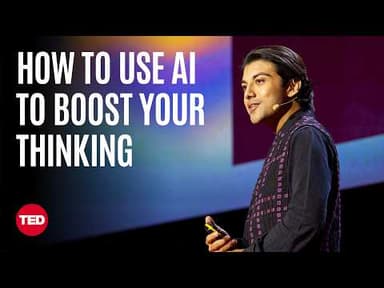
- Critical Thinking | Let AI Help Without Letting It Think for YouThe previous video asks whether machines may replace human work. This one raises a quieter question: even when the work remains ours, are we beginning to outsource the thinking itself? AI and design researcher Advait Sarkar examines the cognitive trade-offs of using chatbots at work. When AI drafts, summarizes, and answers before we have struggled with a problem ourselves, we can become reviewers of machine output rather than active participants in our own reasoning. Sarkar is not arguing that we should stop using AI. Instead, he asks whether these tools can challenge our assumptions, reveal gaps in an argument, and encourage reflection rather than simply handing us finished answers. The distinction feels important: speed is not the same as understanding, and convenience does not always lead to learning. My takeaway: the most useful AI may not be the one that thinks for me, but the one that helps me think more carefully. Video information Original title: How to Stop AI from Killing Your Critical Thinking Channel: TED Speaker: Advait Sarkar, AI and design researcher Recorded: September 2025 at TEDAI Vienna Published: December 28, 2025 Runtime: 14 min 54 sec
- VIDEO NOTE 5
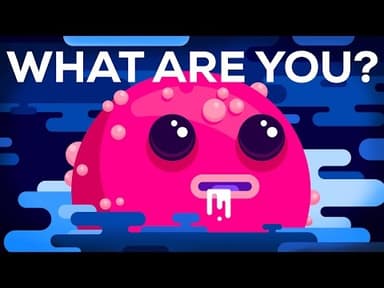
- The Self | What Makes You “You” When Everything Changes?This Box began by asking whether algorithms are changing us. The final video turns that question inward: what exactly is the “us” being changed? Kurzgesagt explores the self through cells, organ donation, cancer, DNA, and the body’s constant transformation. It suggests that a person may be less like a fixed object and more like a changing, self-sustaining pattern—one that continues even as its physical parts are replaced. Published in 2016, this is best approached as a science-based thought experiment rather than a current biology lesson. Its value lies in the question it leaves behind: if our bodies, attention, work, and ways of thinking keep changing, what allows us to remain ourselves? My takeaway: algorithms may influence what I see and how I think, but understanding that influence begins with asking what kind of person I want to keep becoming. Video information Original title: What Are You? Channel: Kurzgesagt – In a Nutshell Published: May 31, 2016 Runtime: 6 min 27 sec Note: Part of a collaboration with CGP Grey
Videos (5)

 Are Algorithms Changing Us? Attention, AI, and What Makes Us Human09/22/20260 followers
- WHAT
- Algorithms do more than decide what appears in our feeds. They influence what holds our attention, how we work, how we use AI, and sometimes even how we understand ourselves. This PickBox brings together five videos that move from a familiar problem—why it has become so difficult to focus—to broader questions about algorithm design, automation, critical thinking, and what makes us human. Some of the videos are recent, while others were made before generative AI became part of everyday life. The older ones are included not as current predictions, but as questions worth revisiting now. If you can, watch them in order. The full journey takes about an hour.
- WHY
- I use recommendation feeds and AI tools every day, often without noticing how they may be changing my attention, habits, or way of thinking. Rather than deciding whether technology is simply good or bad, I wanted to ask a quieter and more personal question: As machines become capable of doing more for us, what should we continue doing for ourselves? Placed together, these videos made the subject feel less like a story about technology and more like a story about being human.
- WHO
- For anyone who uses social media or AI and has wondered what these tools might be changing—not only around us, but within us. No technical background is needed. This Box may be especially interesting if you care about attention, digital well-being, the future of work, critical thinking, or the relationship between technology and human life.
- VIDEO NOTE 1
- Attention First | Why It Has Become So Hard to FocusBefore asking how algorithms and AI may be changing us, this Box begins with something more immediate: the difficulty of holding our attention. Author and productivity expert Chris Bailey argues that the problem is not distraction alone, but overstimulation. Drawing on his own experiments with reducing digital stimulation, he explores how constantly seeking novelty can leave less room for focus, reflection, and unexpected ideas. This is less a lesson about getting more done than an invitation to notice what our minds have gradually become accustomed to. My takeaway: perhaps I am not simply bad at focusing. Perhaps my mind rarely gets the quiet it needs. Video information Original title: How to Get Your Brain to Focus | Chris Bailey | TEDxManchester Channel: TEDx Talks Published: April 8, 2019 Runtime: 15 min 57 sec
- VIDEO NOTE 2
- The Feed Is a Choice | What Should an Algorithm Serve?After the first video examines what constant stimulation does to our attention, this one turns toward the systems creating much of that stimulation. Musician and Patreon co-founder Jack Conte argues that algorithms are not neutral. They reflect the priorities and business models of the people who design them. When a platform optimizes for watch time and immediate engagement, creators are pushed to chase trends while viewers are encouraged to keep scrolling. Rather than rejecting algorithms altogether, Conte proposes different priorities: long-term relationships between creators and fans, art supported by people instead of advertising, and greater control for the humans using the system. Because Conte is also the CEO of Patreon, this is not a detached academic critique. It is partly Patreon’s own product philosophy—which makes it worth watching with both curiosity and a little distance. My takeaway: an algorithm is not simply something that happens to us. Someone has decided what it should reward. Video information Original title: I’m Building an Algorithm That Doesn’t Rot Your Brain Channel: New York Times Opinion Featuring: Jack Conte, co-founder and CEO of Patreon Published: November 19, 2025 Runtime: 7 min 15 sec
- VIDEO NOTE 3
- Automation | Are Humans Becoming the Horses?Published in 2014—long before ChatGPT and today’s generative AI boom—this video asks what automation could mean for human work. CGP Grey begins with horses. For centuries, they were essential to transportation, farming, and industry. Then machines became cheaper and more capable, and the demand for horse labor collapsed. His unsettling question is whether “mechanical minds” could eventually do to human workers what mechanical muscles once did to horses. The video moves from transportation and routine labor to professional and creative work, challenging the comforting assumption that technology will always create enough new jobs to replace the ones it removes. Its argument is deliberately pessimistic, and some examples and figures reflect the world of 2014. It should not be treated as a settled prediction. That distance is precisely what makes it interesting now: we can compare what the video anticipated with what has—and has not—happened since. My takeaway: “new jobs will always appear” may be a reasonable hope, but it is still an assumption worth examining rather than a guarantee. Video information Current YouTube title: What Happened to Horses Is Happening to Us Original title at release: Humans Need Not Apply Channel: CGP Grey Published: August 13, 2014 Runtime: 14 min 58 sec
- VIDEO NOTE 4
- Critical Thinking | Let AI Help Without Letting It Think for YouThe previous video asks whether machines may replace human work. This one raises a quieter question: even when the work remains ours, are we beginning to outsource the thinking itself? AI and design researcher Advait Sarkar examines the cognitive trade-offs of using chatbots at work. When AI drafts, summarizes, and answers before we have struggled with a problem ourselves, we can become reviewers of machine output rather than active participants in our own reasoning. Sarkar is not arguing that we should stop using AI. Instead, he asks whether these tools can challenge our assumptions, reveal gaps in an argument, and encourage reflection rather than simply handing us finished answers. The distinction feels important: speed is not the same as understanding, and convenience does not always lead to learning. My takeaway: the most useful AI may not be the one that thinks for me, but the one that helps me think more carefully. Video information Original title: How to Stop AI from Killing Your Critical Thinking Channel: TED Speaker: Advait Sarkar, AI and design researcher Recorded: September 2025 at TEDAI Vienna Published: December 28, 2025 Runtime: 14 min 54 sec
- VIDEO NOTE 5
- The Self | What Makes You “You” When Everything Changes?This Box began by asking whether algorithms are changing us. The final video turns that question inward: what exactly is the “us” being changed? Kurzgesagt explores the self through cells, organ donation, cancer, DNA, and the body’s constant transformation. It suggests that a person may be less like a fixed object and more like a changing, self-sustaining pattern—one that continues even as its physical parts are replaced. Published in 2016, this is best approached as a science-based thought experiment rather than a current biology lesson. Its value lies in the question it leaves behind: if our bodies, attention, work, and ways of thinking keep changing, what allows us to remain ourselves? My takeaway: algorithms may influence what I see and how I think, but understanding that influence begins with asking what kind of person I want to keep becoming. Video information Original title: What Are You? Channel: Kurzgesagt – In a Nutshell Published: May 31, 2016 Runtime: 6 min 27 sec Note: Part of a collaboration with CGP Grey
Comments0
Checking sign-in status...
There are no comments yet.